On Wednesday, October 14, the Duderstadt Center hosted Planting Disabled Futures, a virtual reality/community performance ritual. The event was hosted in the Video Studio, where participants could have a meditative experience in virtual reality. Following that, Petra Kuppers, a professor at the University of Michigan and the Director of the Planting Disabled Futures project, led…
On Wednesday, October 14, the Duderstadt Center hosted Planting Disabled Futures, a virtual reality/community performance ritual. The event was hosted in the Video Studio, where participants could have a meditative experience in virtual reality. Following that, Petra Kuppers, a professor at the University of Michigan and the Director of the Planting Disabled Futures project, led a performance piece that used meditation to connect the audience with nature.
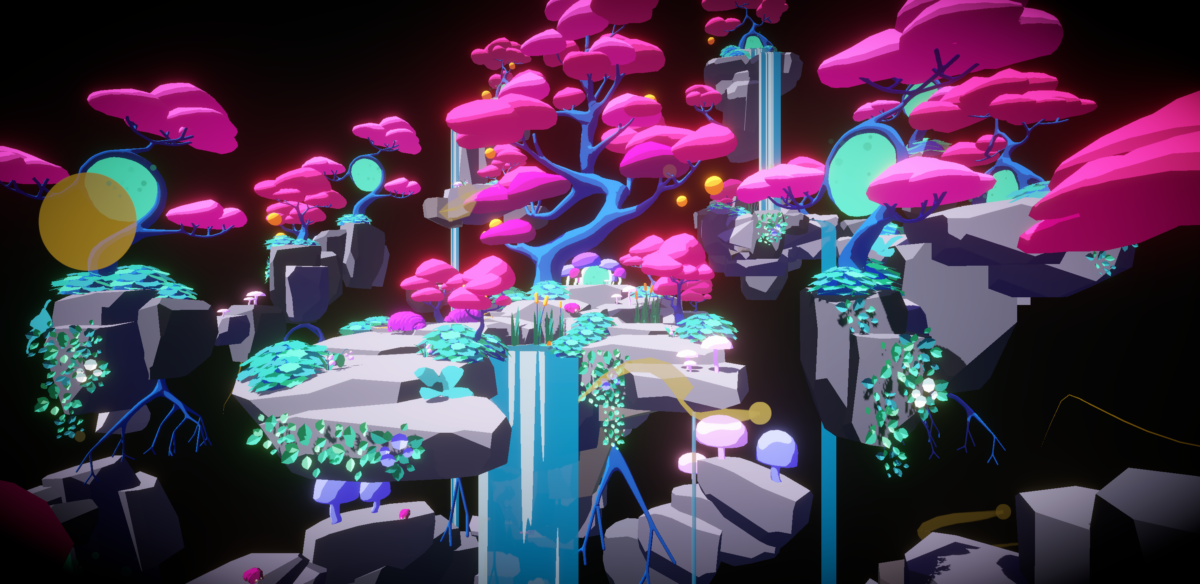
Daniel Vincenz, a Digital Artist at the Digital Media Commons, worked as the lead developer on the VR world in Planting Disabled Futures. He designed a world with 18 portals, each leading to an experience created by various artists. The world features trees with pink leaves and purple trunks, floating rocks, fireflies, mushrooms and waterfalls.
At the start of the experience, users can choose between an audio option, using echolocation, or a visual option. When asked about his favorite part of the project, Vincenz said he liked the accessibility features.
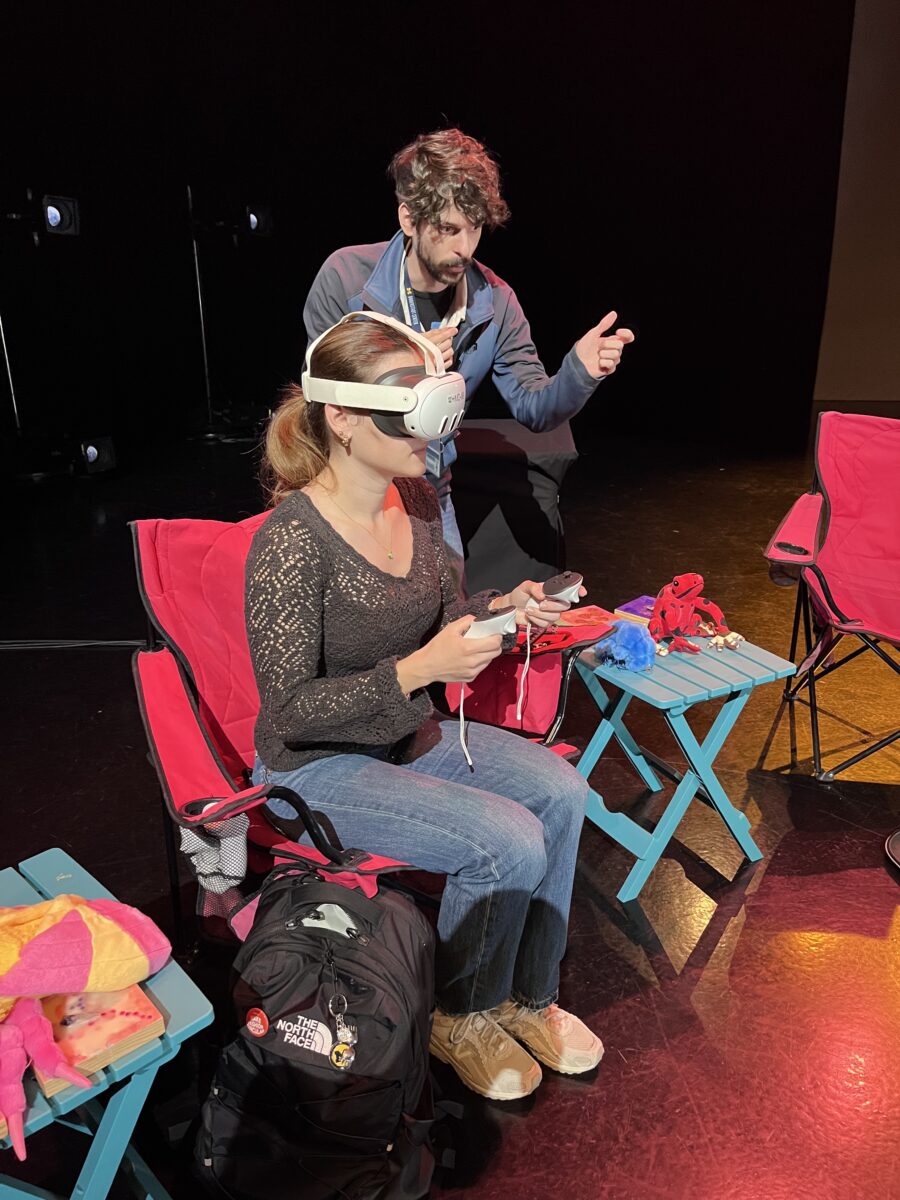
Digital Media Commons artist and developer Daniel Vincenz guiding a guest through the virtual reality world of Planting Disabled Futures, Duderstadt Center Video Studio, Oct. 14, 2026. Photo courtesy of Petra Kuppers.
“I like that we’ve taken time to make it accessible for as many people as we possibly could,” Vincenz said. “We have the mode for the audio forward version that allows you to find your way using sound and echolocation. We’ve also taken the time to put in anti-motion sickness features and audio descriptions. I think it is my favorite part because it is rewarding to see people be able to use it.”
The portals lead to experiences centered around contact, sensuality, and disability. 30 collaborators worked with Kuppers on the experience in the span of two years. The collaborators typically appeared in the portals, interacting with plants in a video or guiding the user in meditation while they looked at images of nature.
A low-poly 3D render of a floating island landscape from the main area of Planting Disabled Futures. Each island is made of light gray stone and speckled with vines, bushes, and trees. Light blue cascading waterfalls flow from one island to another. Stylized trees with vibrant pink canopies dot the islands, and some trees have turquoise, circular portals that lead to other areas. Yellow fireflies float ambiently in the background, and large pink isopods inhabit the area. Courtesy of Daniel Vincenz.
Kuppers said that the most important part of the VR world was featuring many different voices to celebrate a connection to the natural world.
“What’s most important is to have a wide variety of voices in the project. I have people who are blind. I have people who identify around madness. I have people who identify around neurodiversity. People with painful bodily experiences like myself. People with mobility differences,” Kuppers said. “Many of us are not able to perform on stage, and I find other ways, often in new forms of media, to share the beauty of ourselves as disabled people.”
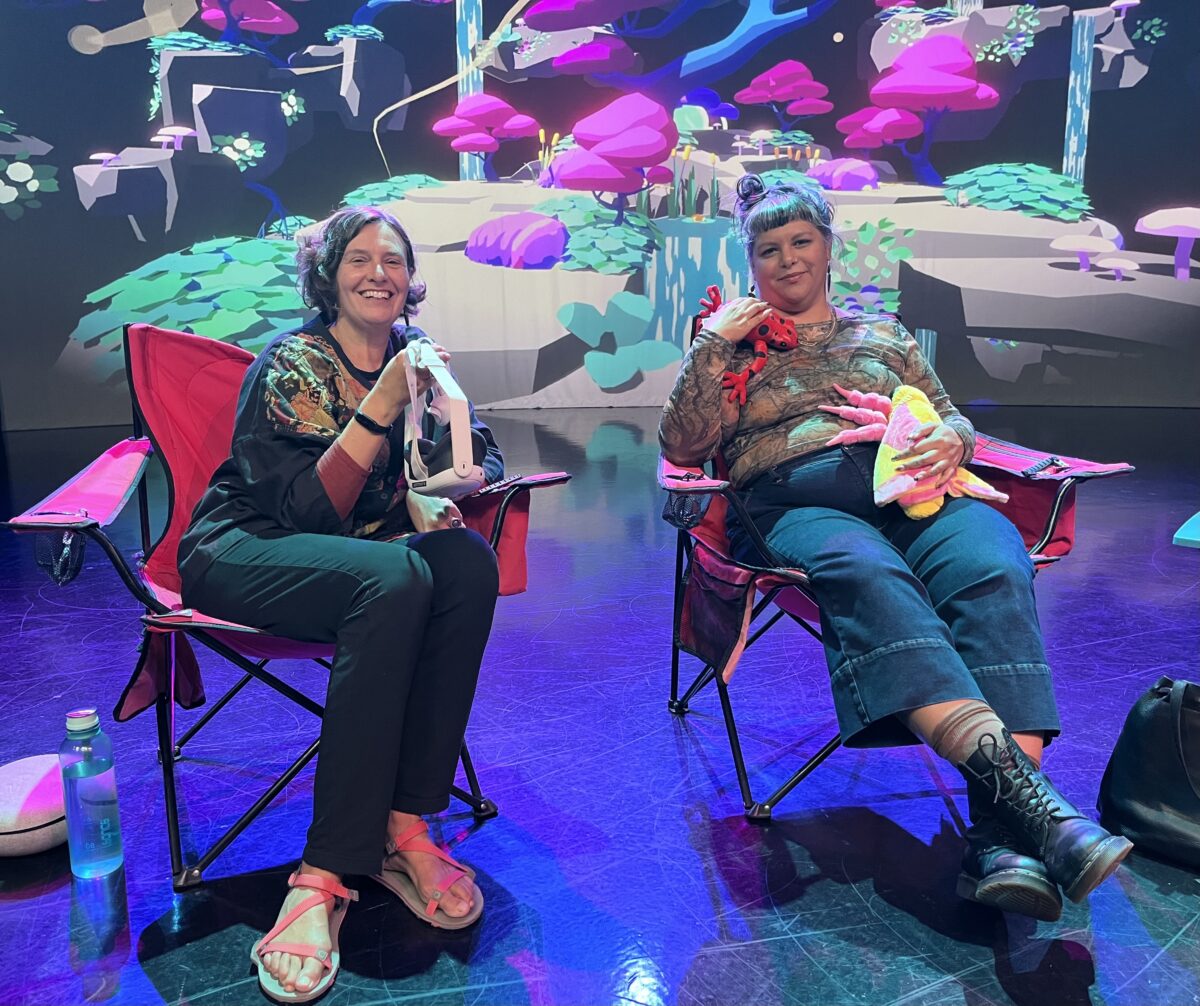
Guest performer Taja Will opened up the next segment of the event with the Limpia Ritual, using eucalyptus to open up the space. Attendees could smell and feel the plant, which prepared them for Kuppers to lead them on an embodied dream journey.
Access Doula Stephanie Heit (left) and guest performer Taja Will in the Duderstadt Center Video Studio, Oct. 14, 2026. Photo Courtesy of Petra Kuppers.
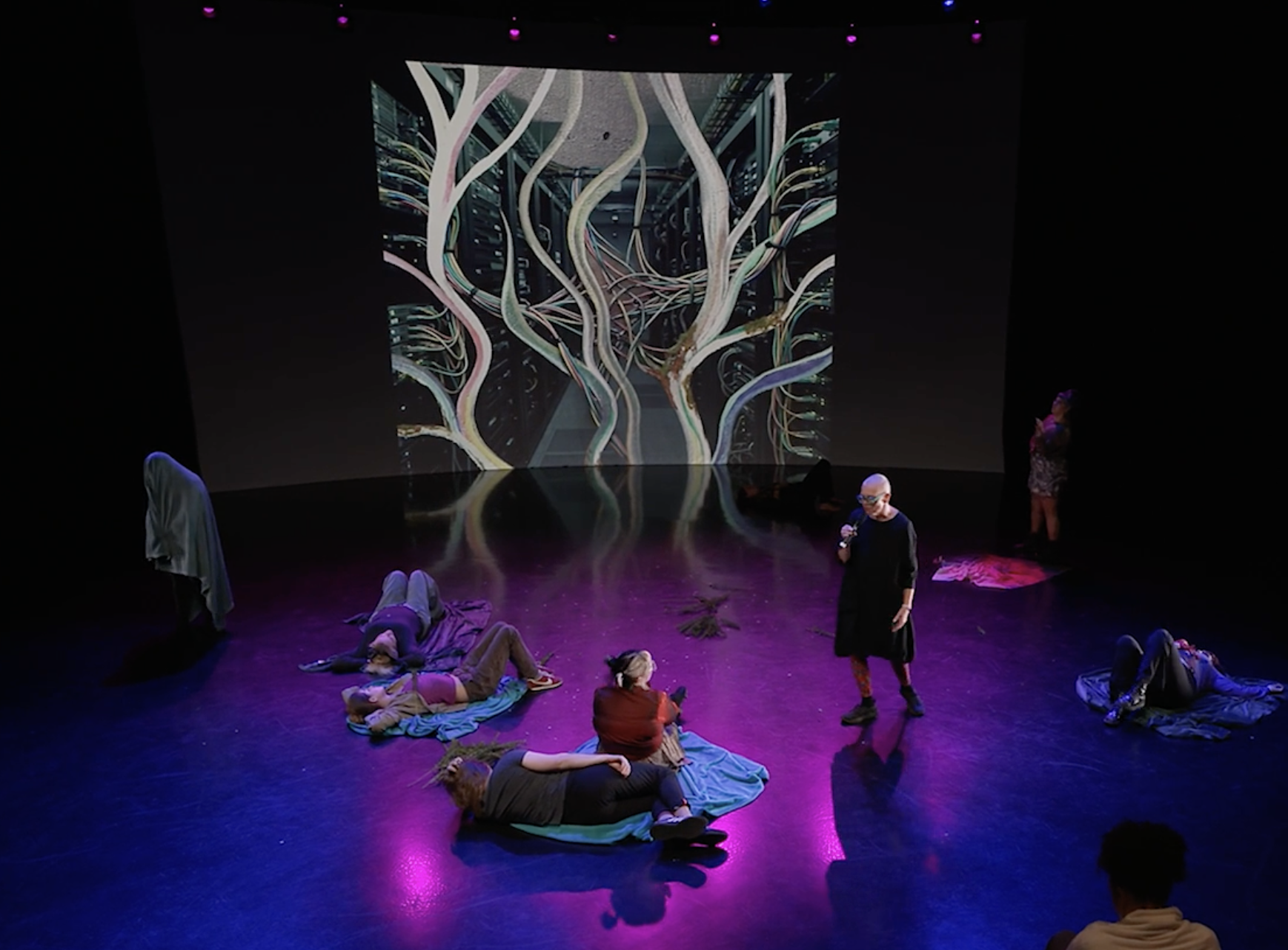
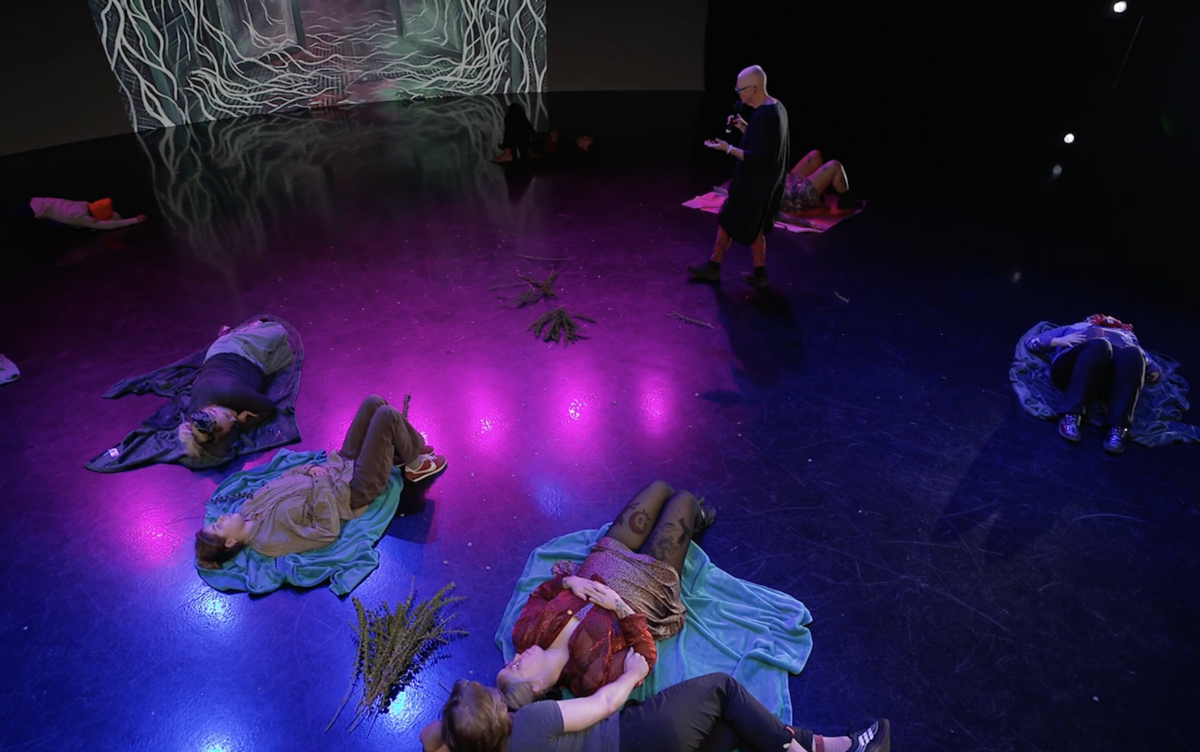
Kuppers invited attendees into the studio space, letting them be part of the performance. Throughout the meditative process, attendees could rest or move about the room, reacting in a way which best fit them. The meditation, called Data Center Wetlands, was a community jam which focused on how nature can overcome artificial technologies.
The Data Center Dance at the Planting Disabled Futures live event, Duderstadt Center Video Studio, Oct. 14, 2026. Photo Courtesy of Petra Kuppers.
To close out the session, Kuppers said participants should focus on the energy around them and the sensation of the eucalyptus.
“Let’s have a last dance, a dance together. Maybe you look at one another. Maybe you find connection in this plant dance. Maybe there is an energetic touch. Maybe a space for an actual touch. Warmth, the electricity of skin on skin. Maybe some of you touch in with the plant, eucalyptus, sticky and aromatic, touching skin, having a dance of scent and sense and sensuality.”
Planting Disabled Futures won the 2026 Dance in the Public Sphere Award from the Dance Studies Association. You can watch the Data Center Dance from the October 14 event online.