
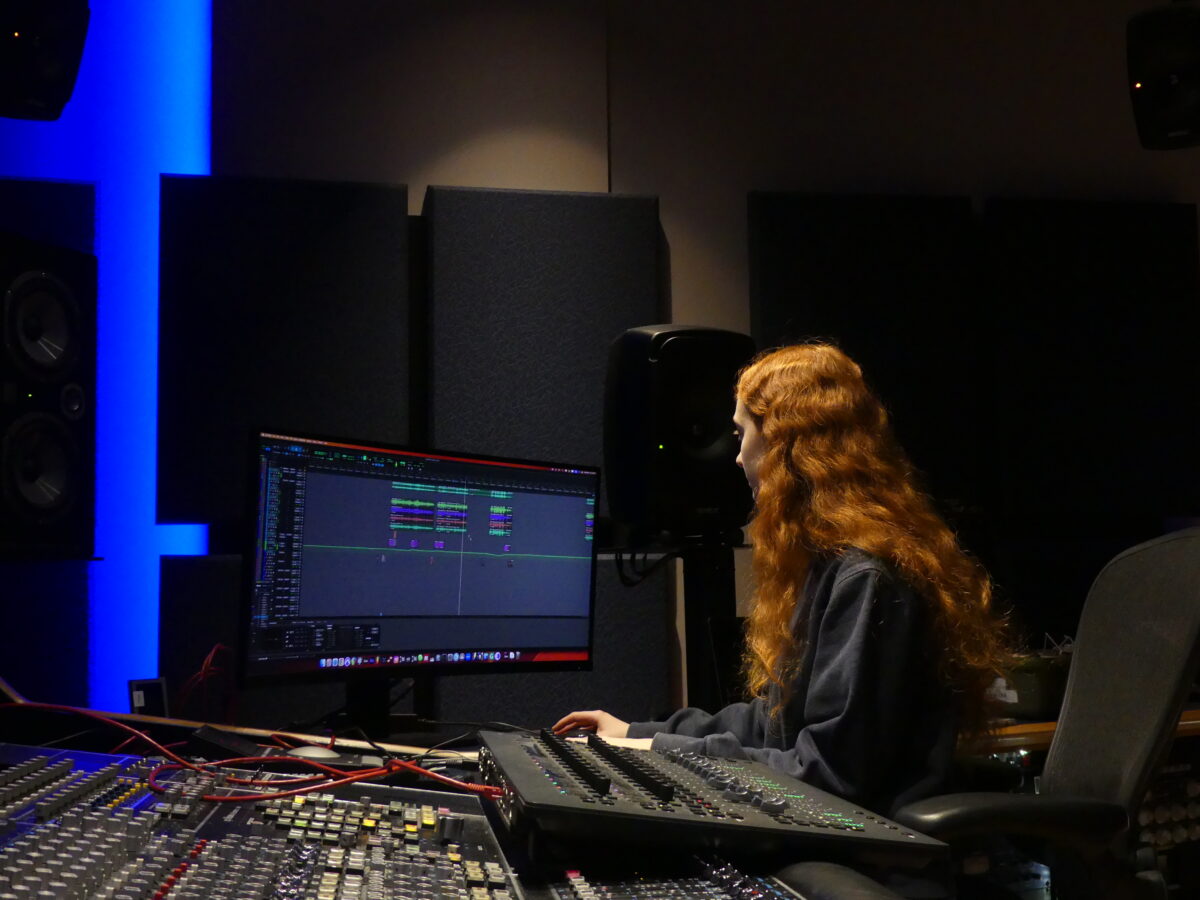
Over the summer of 2025, University of Michigan Performing Arts and Technology senior Renata Schmult began working as the Post-Production Sound Editor and Re-Recording Mixer for the project How Do We Begin– a feature film adapted from a stage play by Jordan Harris, initially inspired by 2020 book by Matthew Johnson– that details and reenacts the history of the University’s historical tensions with racial discrimination.
“It’s a cool project that means a lot to the clients,” Schmult said. “The people at CRLT, [the Center for Research Learning and Teaching, who funded and created the project], were wonderful to work with.”
However, not just the project was exemplary, but so were Schmult’s efforts for the project as Post-Production Sound Editor. Schmult was commended for her work, often going above and beyond and staying long nights until the project was just right.
“Her efforts were tremendous [just for] the scope of the project,” said Catherine Miller, the Co-Cinematographer, Post Production Supervisor, and Assistant Manager of the Duderstadt Center Video Studio, who oversaw aspects of Schmult’s work for the project. The final run time for the project was 49 minutes. To get it perfect, Schmult watched the entire film thirty to forty times.
Within the extended runtime, Schmult had a wide variety of responsibilities and tackled many roles. A post-production sound department usually has individual roles for each of the audio components: one person responsible for dialogue, sound effects, foley and music. For this project, she tackled all of them.
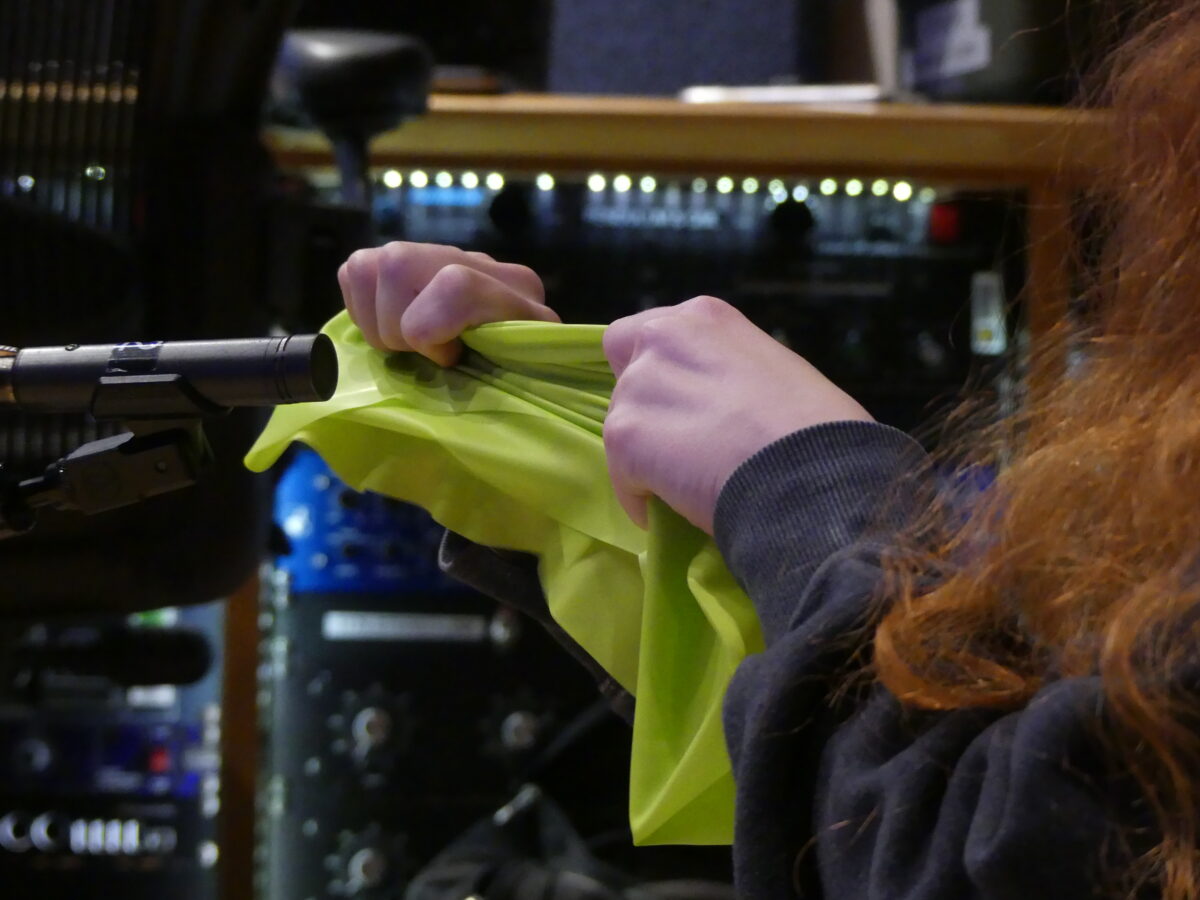
One of the first steps in her process was to create foley, or create film sound effects during post-production, after the film is cut. A foley artist will watch the video visual for the film while recording and creating the sound effects in real time. For How Do We Begin, Schmult says a boxing scene, between two characters made to symbolize prejudiced beliefs of the old ways versus the modern beliefs (like during the Civil Rights movement), was a stand out scene for her creatively.
“There’s a seven-minute-long boxing scene, the most intricate scene I have done,” Schmult said. “I did foley for the whole scene, put in ambiences with the crowd noise, the crowd reacting to what the protagonists are saying, and added sound effects with the punches.”
With everything that amounted within the scene, it is a proud accomplishment among the Duderstadt Center staff. Miller shares her pride of how the scene turned out.
“The boxing scene also lent itself to exciting sound design with punches, body blows, and cheers and jeers from the crowd,” Miller said, commenting on Schmult’s work. “Our whole team is proud of how this sequence turned out.”
Schmult often had to be imaginative with what items might make the correct sound effects, sometimes using unexpected household items. For the boxing scene, she used scuffing shoe sounds from her bedroom floors.
“I found that my footsteps while wearing sneakers in my bedroom at my apartment worked well,” said Schmult. “The floors were similar when I scuffed my feet.”
Additionally, for the punching sound effects between the two characters, she used couch cushions from her home.
“I was looking around my apartment for faux leather that would sound similar to boxing gloves, and thought the faux leather on my couch might work,” Schmult said. “So, I played the video, and recorded myself hugging the couch cushion. It actually matched up quite well.”
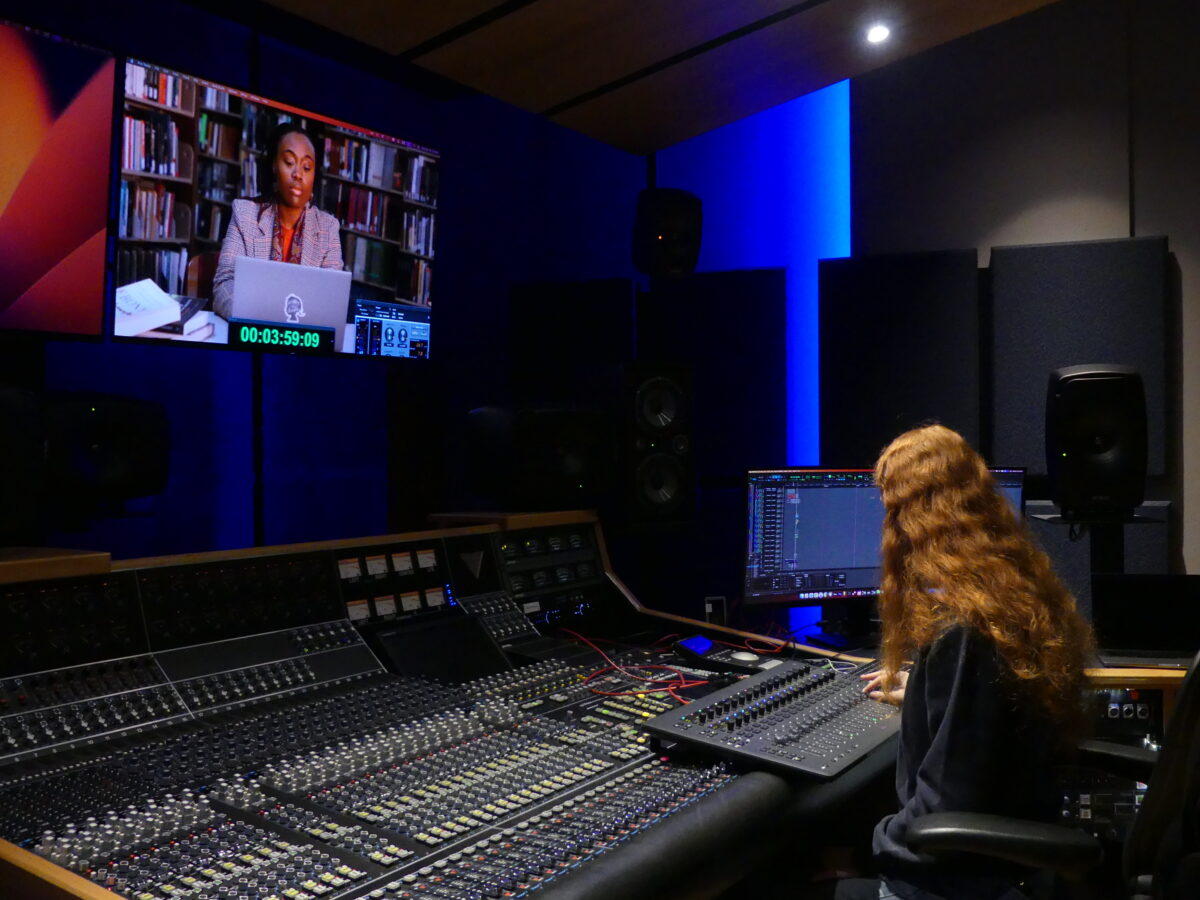
After creating sound effects, Schmult edits them with the rest of the film: syncing, layering, and creating transitions of the sounds. Once Schmult was done with her part, a casual viewer would have no idea that the sound and visuals may be from different sources.
“Does it sound natural? Does it sound like it is happening in the same space? Would these things realistically match up with how loud things should be?” Schmult said.
Overall, Schmult’s efforts towards the project were tremendous, and though the full video is not publicly available, editors hope it will be shared with students and the University community, with guided viewings and facilitated conversations for years to come. You can find more of Schmult’s work through her portfolio website, or follow her at her instagram.
Photo Credits: Courtesy of Duderstadt Center Video Studio
Article by Emma Powell