
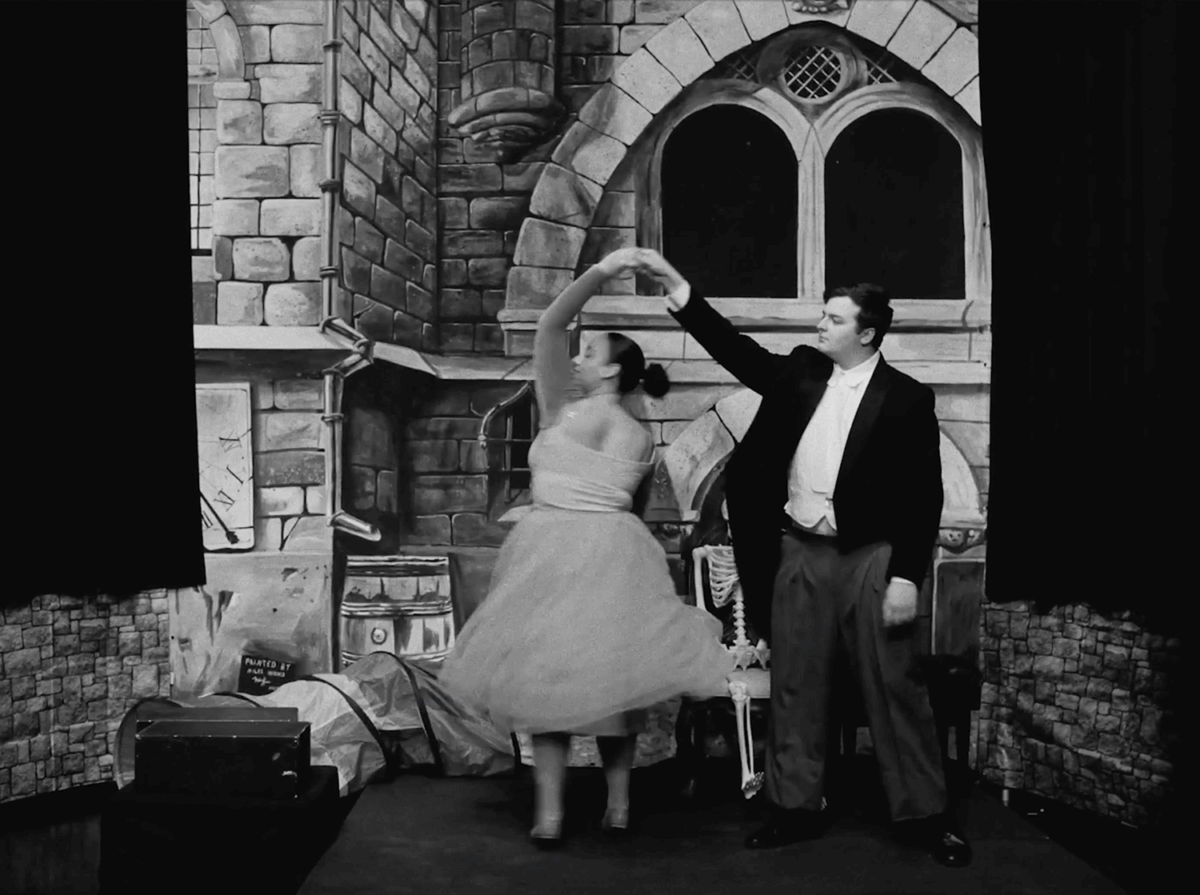
“There’s literally no place in the world where you can take this class, except here,” says professor Matthew Solomon about his Film Television and Media course, FTVM 350.
During the last Winter semester, FTVM 350 released their first-ever recreation of the 1899 Georges Méliès French film An Up-to-Date Conjurer, as the title is known in the United States. The film was also released in Britain, Spain, and its native France.
An Up-to-Date Conjurer features a magician and a ballet dancer performing quick sleight-of-hand tricks aided by the editing of film. The magic includes disappearances and reappearances, as well as slightly spooky transformations.
The FTVM 350 course focuses on the era of the silent screen, often studying pieces of the era and analyzing how they were made. However, this last winter was the first time that professor Solomon had the class recreate their own film, rather than studying the films of others. This is a way of teaching called experimental media archaeology: a method used for learning history through recreation, reenactment, and the use of old technologies.
“This was the first time that I really tried to go all in with hands-on history,” Solomon said. “It’s an emerging modality, trying to learn by replicating the past and seeing what you can learn from that.”
The class worked collaboratively to create the finished project at the end of the semester: a one minute-thirty-second recreation of the original film, with props, costumes, actors and scenery.
Charlie Splete, a recent FTVM graduate and editor of the film, elaborates on the work done for this project. “We had so much preparation that went into this, like we couldn’t just start shooting film,” said Splete. “We had choreography and costuming, and we practiced with a digital version of the film.”
Additional preparation that went into the film was creating a massive backdrop almost identical to the original from 1899. For the task, they asked Miles Hionis, a senior getting his BFA in Interarts Performance.
“It was just incredible,” professor Solomon said, about seeing the backdrop for the first time. “It was like a light bulb went on; I think the biggest surprise was just what [Miles] was able to do and how crucial it was for our final product.”
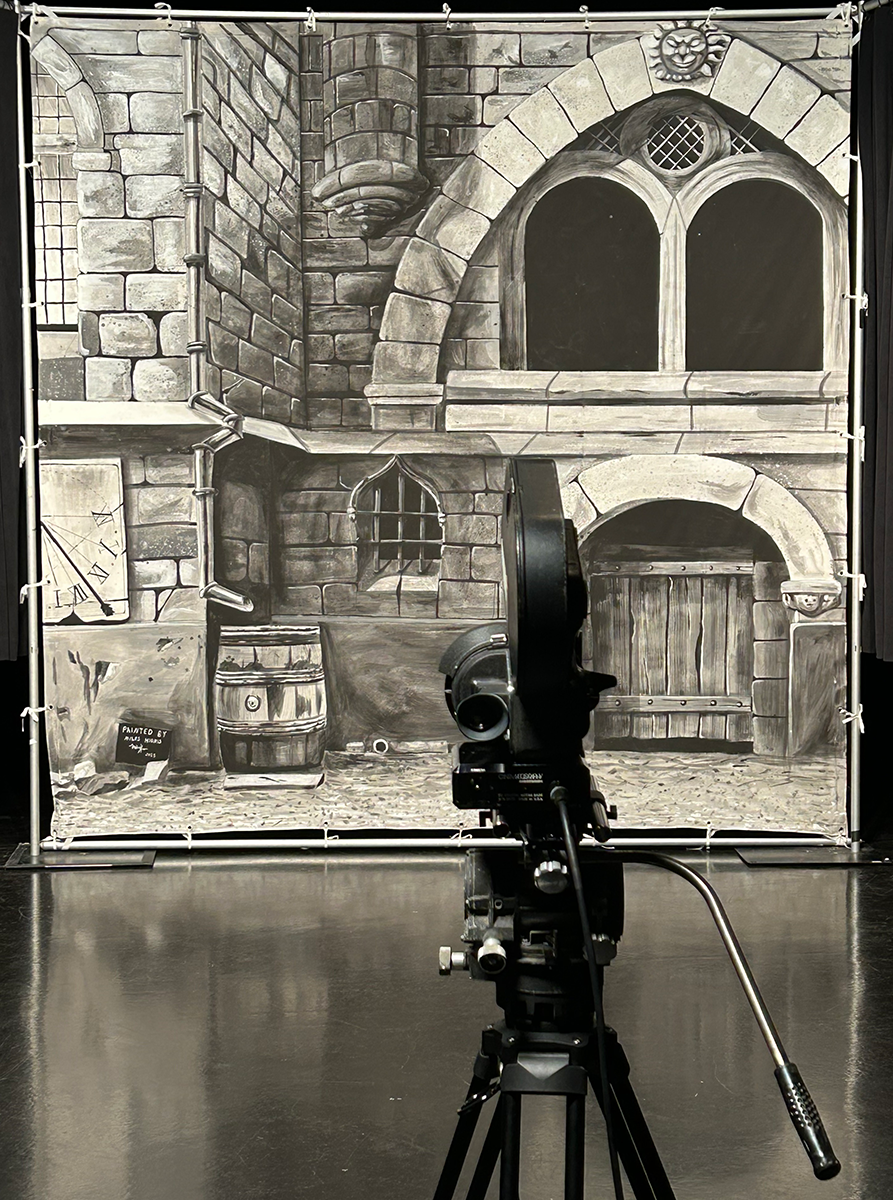
Still of backdrop. Courtesy of Matthew Solomon.
Through all the work that had to be done to create the final product, it was critical to make sure that the film recreated was worth it. The question was, why recreate the work of Méliès?
Georges Méliès is known for his special effects, tricks of the eye, and early experiments to push the limits of what films can do. His most famous work was the 1902 film A Trip to the Moon, an early pioneer film of science fiction.
“I think his work is inexhaustible,” said Solomon with a smile. “When I used to teach an introductory course, I would insert Méliès; so much so that on my final evaluations by a student felt the course motto should be: ‘What Would Georges Méliès Do?’”
In the era of Méliès, all films were tangible film stock, but digital cinema has largely overtaken analog filmmaking, especially in the classroom where 35mm film is mostly cost-prohibitive. For University of Michigan students, FTVM 350 is the only option for working with this format, which is still widely used in the film industry.
“There really aren’t any other classes in FTVM that are shooting with film,” said Splete. “Having that tangible film stock is so unique. I loved the opportunity to shoot with 35mm.”
The University does not presently use 35mm film cameras in the classroom. In fact, this project wouldn’t be possible without the loan of a film camera supplied by the Duderstadt’s Assistant Managing Producer Catherine Miller, from her private collection.
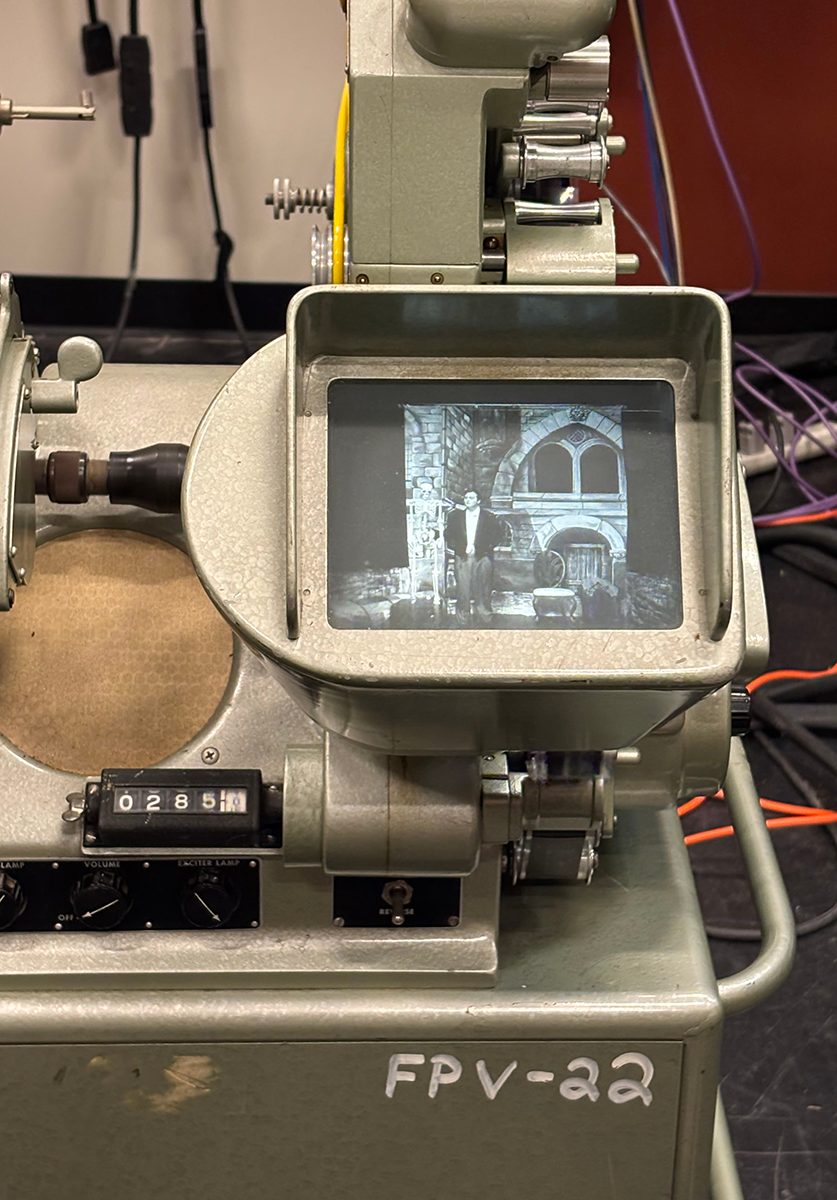
Part of the film editing process. Courtesy of Charlie Splete.
Additionally, this project may not have been possible if it weren’t for the work of a recent University alum. “I’m following Rose Albayat because I was very much inspired by her project,” Solomon said about his previous student. “I’m not sure I would have tried it if I hadn’t seen what she had done.”
Albayat recreated the work of Méliès for her honor thesis a few years ago, but digitally rather than 35mm film. She worked as a guide to this class, and she worked as an unofficial consultant on parts of the course. As professor Solomon said, “[this project is] a real collaboration with the students.”
FTVM 350 was generously supported by the Duderstadt Center Video Studio, the Department of Film, Television, and Media, and the Arts Initiative. It will be offered again Mondays in the Winter semester, 10am-1pm. There are no prerequisites needed for this course.
View video here.
Photos by Charlie Splete unless otherwise noted.
Article By Emma Powell